

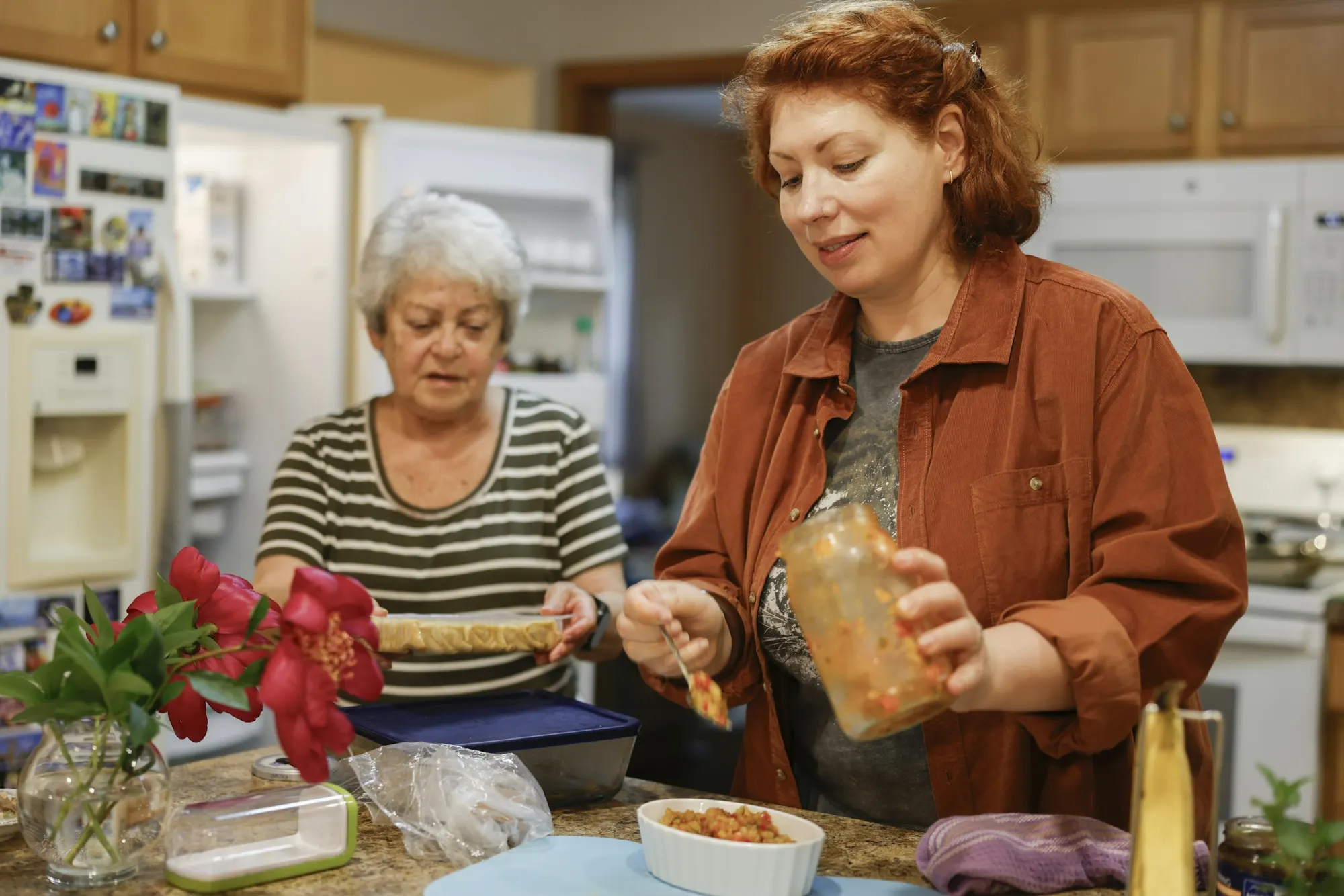
Picture this: You've spent the last year running a household, managing a team, and making a hundred decisions a day without checking with anyone. You pull into your parents' driveway on Wednesday night, carry the bags in, and your mom looks at your kid and says, "Is she still not sleeping through the night?"
Within about ninety seconds, you're explaining yourself. Your voice sounds different (quieter, more defensive), and you've somehow already volunteered to run to the store. If you've ever left a family gathering wondering, "Who was that version of me?" you're not alone. Familiar relationships can pull familiar reactions to the surface, even when you thought you had outgrown them.
Families Keep Us in Familiar Roles
Families develop their own rhythms. Over time, everyone learns what keeps the peace, what starts an argument, and who is expected to do what. Those patterns can become so familiar that they take over before anyone realizes it.
Murray Bowen, whose work shaped much of modern family therapy, called one of the key goals differentiation of self: staying emotionally connected to your family while still thinking and acting from your own values, rather than from the pressure in the room. The holidays tend to test exactly that.
Inside those patterns, we often take on roles: the responsible one, the funny one who defuses tension, the peacekeeper, the overachiever, or the person everyone leans on. These roles usually aren't assigned outright. We develop them as kids, responding to what gets rewarded, what reduces conflict, and what our families seem to need from us.
Then we grew up, and the roles stayed.
The sibling who was always competitive still compares accomplishments. The child who learned to avoid conflict still goes quiet. The one who kept everyone happy still can't sit comfortably when someone is upset.
This is not necessarily a sign that your family is unhealthy. It is a sign that the relationships are well practiced, and that your reactions may be, too.
Why Certain People Push Our Buttons
A coworker makes a comment about your work, and it rolls right off. Your sister says nearly the same thing, and you're still thinking about it at bedtime.
That's history. Family relationships carry years of memories and expectations, so a small comment about your parenting or your job is rarely small. You're not only responding to the person in front of you. You're responding to every version of that conversation you've had before.
When we're emotionally activated, we can become reactive. We fall back on whatever worked at fifteen: defend, withdraw, prove something, please someone.
Understanding this doesn't excuse hurtful behavior, and it doesn't make your frustration invalid. It just explains why the reaction can feel so much bigger than the moment.
The Rules Nobody Said Out Loud
Every family has rules. Some are obvious. Many are never spoken. Don't bring that up. Don't disagree with Dad. Everyone shows up, no matter what else is going on.
Families also tend toward homeostasis: a pull to keep relationships and routines familiar. Even an unhelpful pattern can feel safer than change simply because everyone knows what to expect.
So when you change, you'll likely feel it. Say you've spent years as the person who accommodates everyone. Now you say no to a second night, or you decide to host at your house this year. Someone gets quiet. Someone reminds you that "we've never done it that way."
That discomfort doesn't mean you're wrong. When one person shifts, the whole system has to adjust, and it rarely does so gracefully on the first try.
Loving Them and Being Triggered by Them
We tend to assume that if we love our families, being with them should feel easy.
It doesn't, and that's not a contradiction. You can love your parents and still dread certain conversations. You can adore your siblings and still slide into the old rivalry by dessert.
Both things can be true.
How to Show Up as the Adult You've Become
You can't change your family's dynamics in a four-day visit, and you can't control how anyone else behaves. You can change how you respond.
- Notice the role. Are you managing everyone's feelings? Dodging a topic to keep the peace? Defending every decision? Naming it is the first step.
- Pause before you answer. Ask yourself whether you're responding to what was just said or to something from twenty years ago. You don't have to reply right away. Refilling a drink or stepping into the kitchen counts.
- Remember you have a choice. You can disagree, decide differently, and leave when you planned to leave. A role you've always played isn't a role you're required to keep.
- Expect your family to catch up slowly. They may see you as the person you used to be for a while. You don't need their understanding for your growth to be real.
- Go easy on yourself. You'll probably slip back into the old pattern at least once. That's expected. What matters is that you notice it sooner than you used to.
You Can Go Home Without Going Backward
You can enjoy the traditions, laugh at the same old stories, and appreciate the people who shaped you, and still be who you are now.
You don't have to be the peacekeeper this year. You don't have to prove anything.
Here's one small thing to try this week, before you travel: pick the role you're most likely to slip into, and decide ahead of time what you'll do instead the first time it shows up. Just one. That's plenty.
If the same patterns show up year after year, or family visits leave you replaying conversations and feeling drained for days, individual therapy can help you understand what keeps pulling you into an old role and practice responding in ways that feel more like the person you are now. When several family members want support changing the pattern together, family therapy may also be worth exploring.
We have several providers at Charlotte Therapy Associates ready to help you uncover these patterns, and explore new ways of showing up in your interactions and relationships. Contact us today to schedule a session and begin to uncover the authentic version of you.
This article is for general information and is not a substitute for individual clinical advice, diagnosis or treatment. If you are in crisis, call 911 or dial 988.